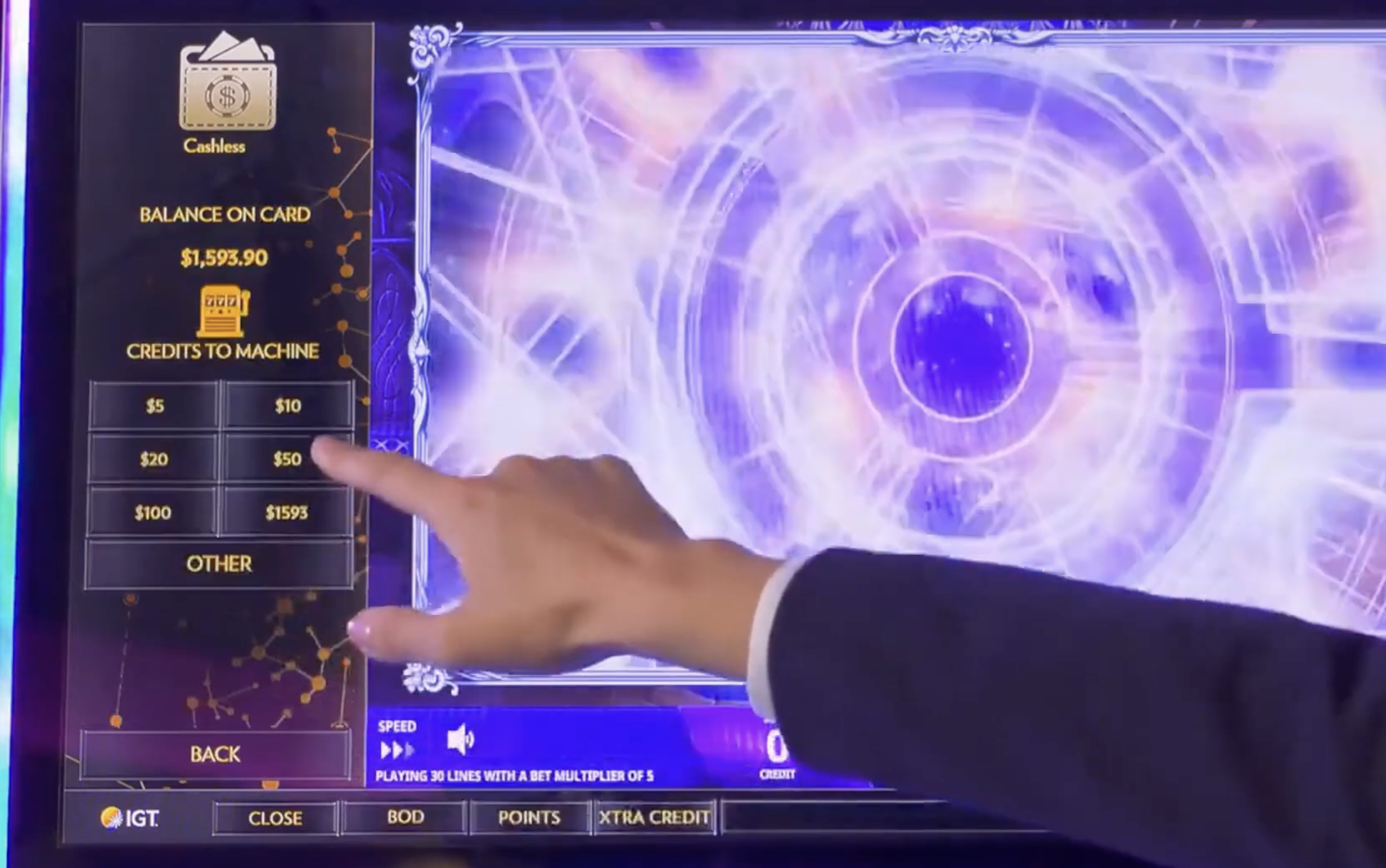
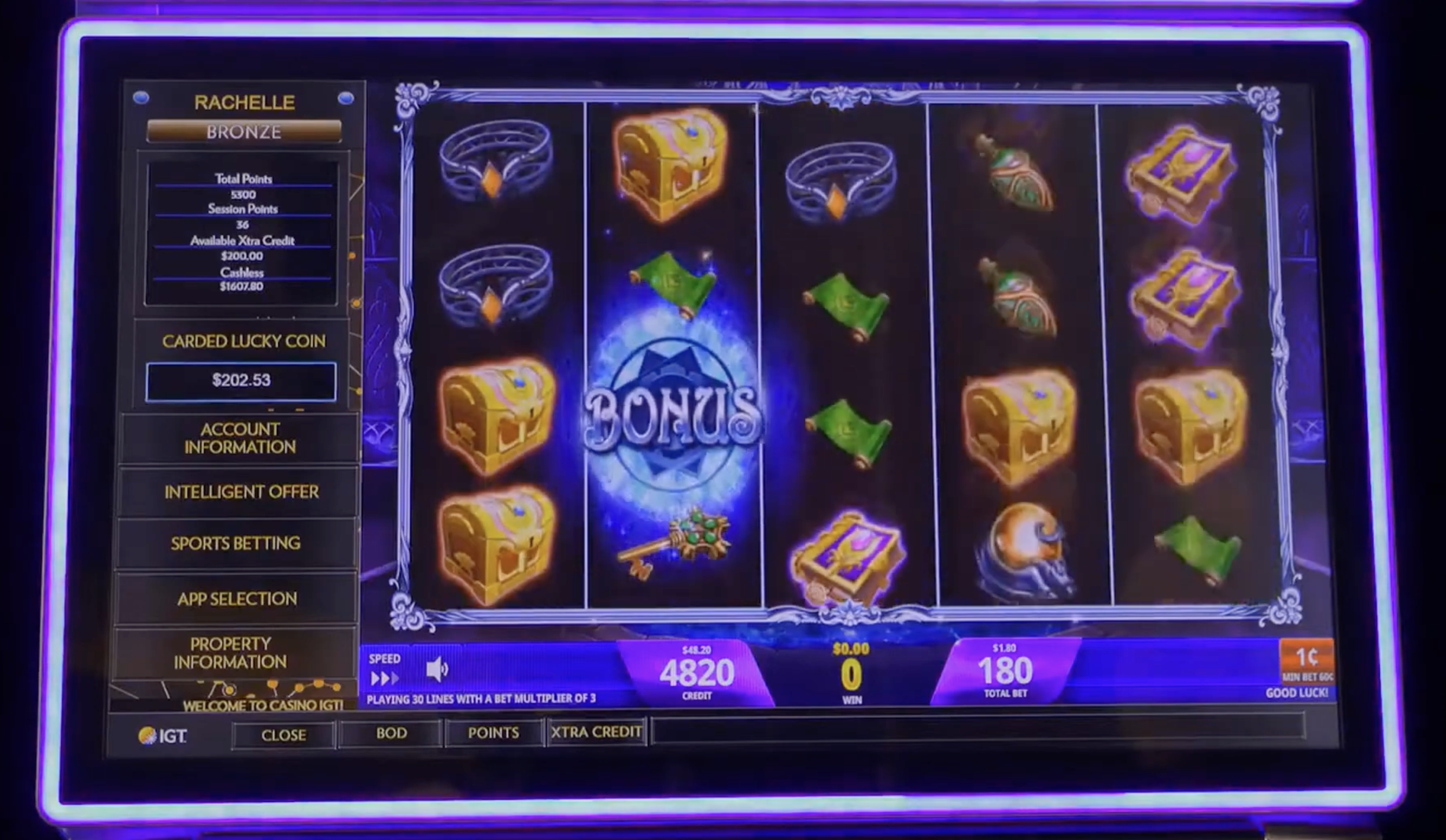
IGT Casino Systems Service Window
Role: Lead UX Designer — Research, Strategy & Product Design. I led cross-functional collaboration across product, engineering, compliance, marketing research, casino partners, and internal support teams, aligning UX strategy with business and technical constraints.
Impact At Glance:
Reduced funding friction · Increased player engagement · Higher casino adoption.
As a result of COVID-19 and accelerated modernization efforts, IGT Casino Systems rapidly shifted toward a fully cashless casino ecosystem. While cashless initiatives existed prior to 2020, the pandemic dramatically increased urgency, forcing casinos to rethink how money, identity, and gameplay interact across physical and digital environments..
This initiative required the design of multiple interconnected systems, including:
Player-facing mobile experiences (casino customer interface)
Casino management software (floor operations, compliance, monitoring)
Internal support and system health platforms (customer support, diagnostics, analytics)
Each system had distinct users, needs, workflows, and constraints, making this a large-scale, multi-platform UX challenge.

UX Challenge
How might we design a secure, intuitive, and scalable cashless ecosystem that reduces funding friction for players, increases engagement and spend, and supports casino operations — while meeting strict regulatory, compliance, and security requirements across multiple interconnected platforms?
Storytelling: From Chaos to Harmony
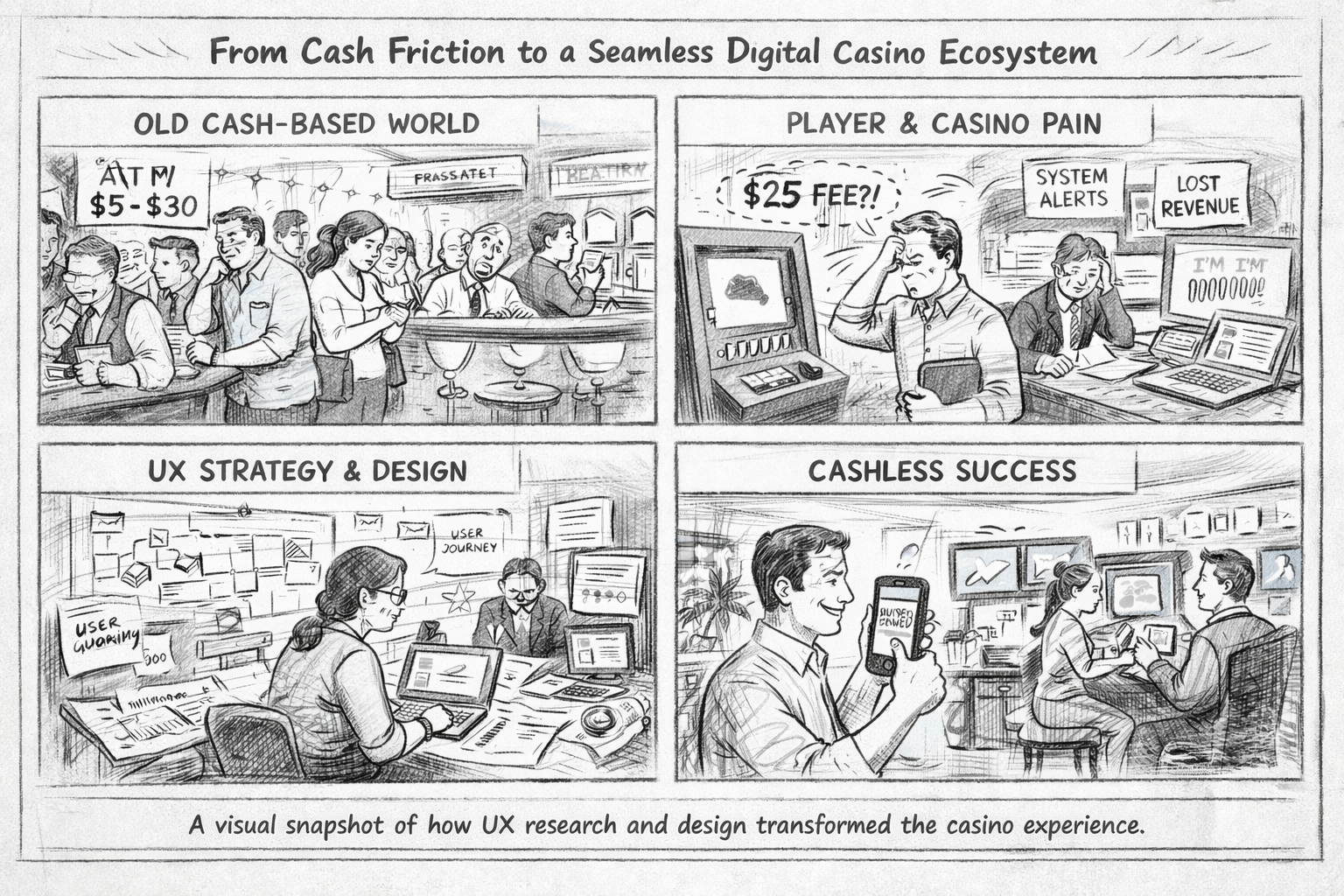
The Problem?
Player Experience
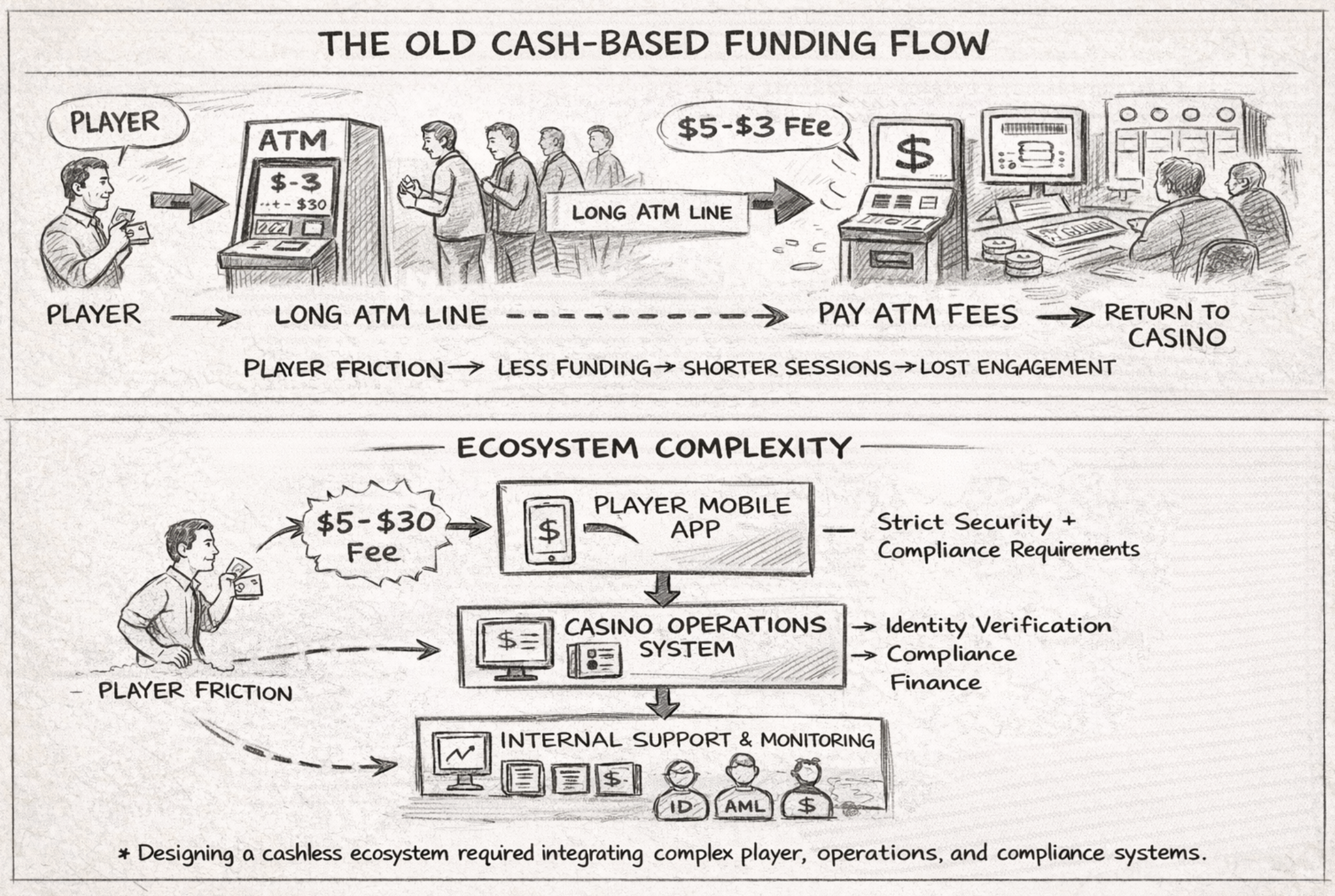
Funding gameplay inside casinos traditionally relied on on-property ATMs, which typically charged
$5–$30 per transaction. This created significant friction:
Players delayed or avoided funding
Many left the casino to search for cheaper alternatives
Others ended gaming sessions prematurely
This resulted in shorter play sessions, frustration, and lost engagement.
Design Opportunity
The challenge was not simply replacing cash — it was redefining how money flows through
the casino ecosystem, balancing:
User trust
Regulatory constraints
Operational efficiency
Business growth.
Casino Operations
For casinos, this friction translated directly into lost revenue and reduced player retention.
Additionally, traditional funding methods created:
Long ATM queues
Increased floor congestion
Operational inefficiencies
Limited insight into player funding behavior.
System & Regulatory Constraints
Designing a cashless ecosystem inside casinos required navigating strict regulatory, security, and compliance requirements, including:
Financial compliance
Anti-money laundering (AML) rules
Player identity verification
Transaction security
Regional gaming regulations
Business Impact
Research showed that cashless funding significantly increases player spend, primarily due to:
Reduced transaction friction
Faster access to funds
Greater convenience
This created a clear business opportunity — but only if the experience could be designed to be
secure, intuitive, and trusted by players.
My Role & UX Process
I led UX research, strategy, and product design across a multi-platform cashless casino ecosystem, collaborating closely with product, engineering, marketing research, compliance, and casino partners.
To manage the complexity of designing for players, casino operators, and internal support teams, I structured the work into four focused UX phases — balancing deep research, real-world testing, and rapid iteration.
🧠 1. Research & Personas
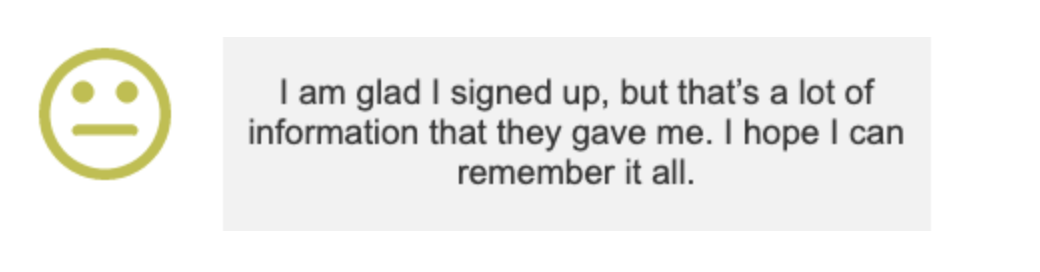
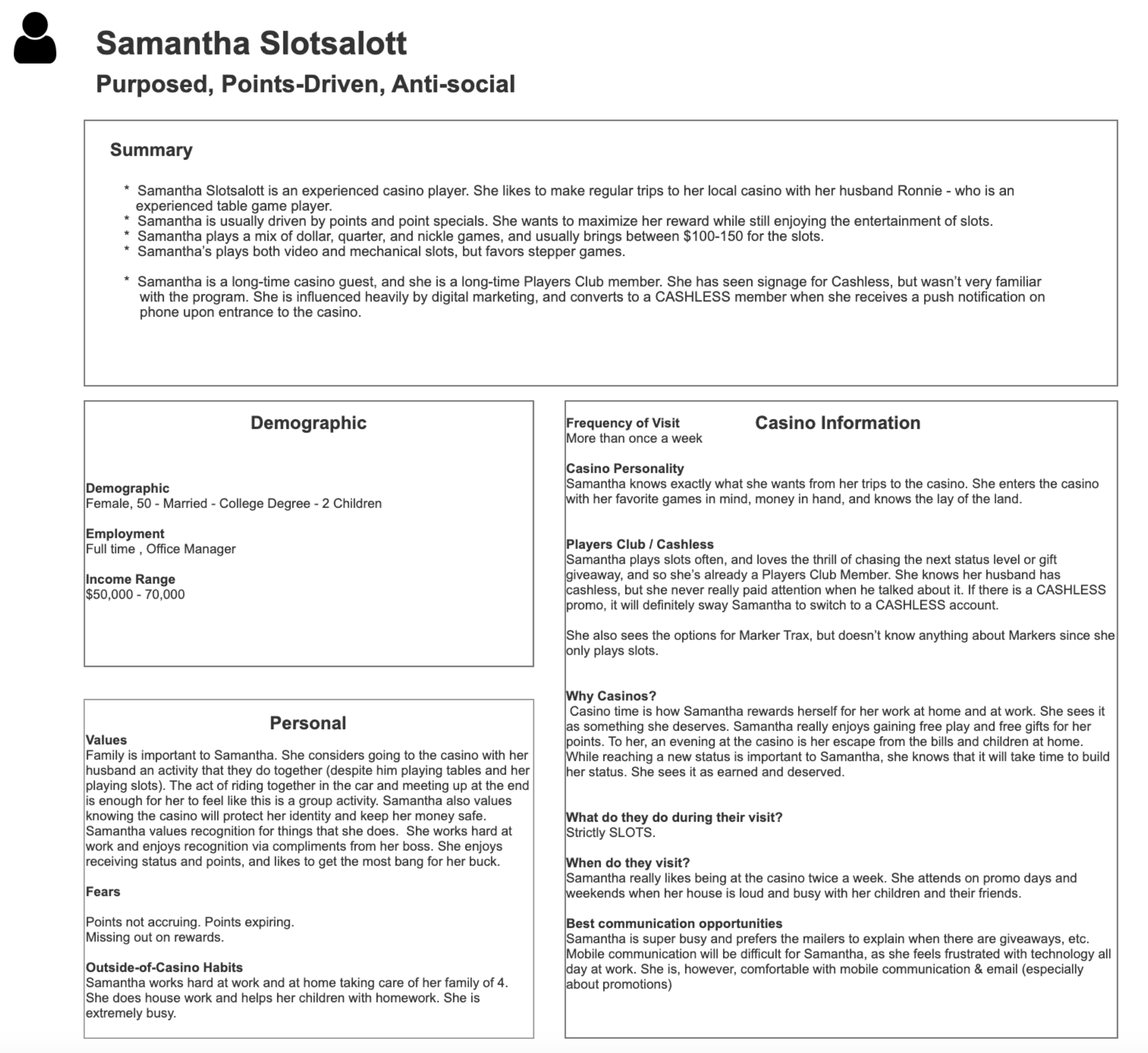
To understand player behavior and operational needs, I partnered with IGT’s marketing research team, analyzing over one year of qualitative and quantitative data.This research was synthesized into core casino player personas, capturing funding habits, motivations, emotional drivers, and gaming patterns — ensuring design decisions were grounded in real customer behavior, not assumptions.
Methods:
Surveys · Focus groups · In-person & remote interviews · Stakeholder workshops

🗺 2. Journey Mapping
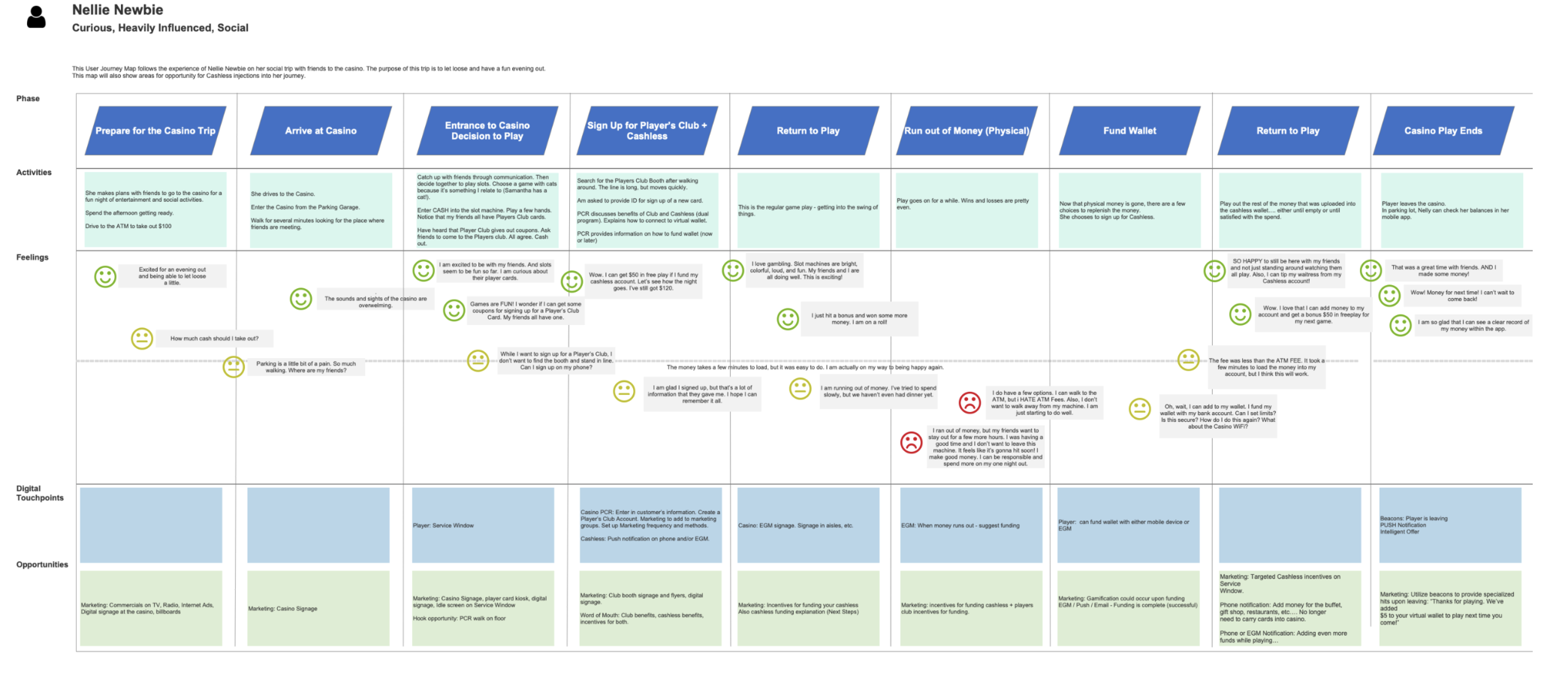
Using real player flows and direct customer quotes, I mapped end-to-end journeys across interconnected systems, including:
Player experience
Casino floor operations
Technical support workflows
Compliance & reporting systems
🧪 3. Live & Remote Usability Testing
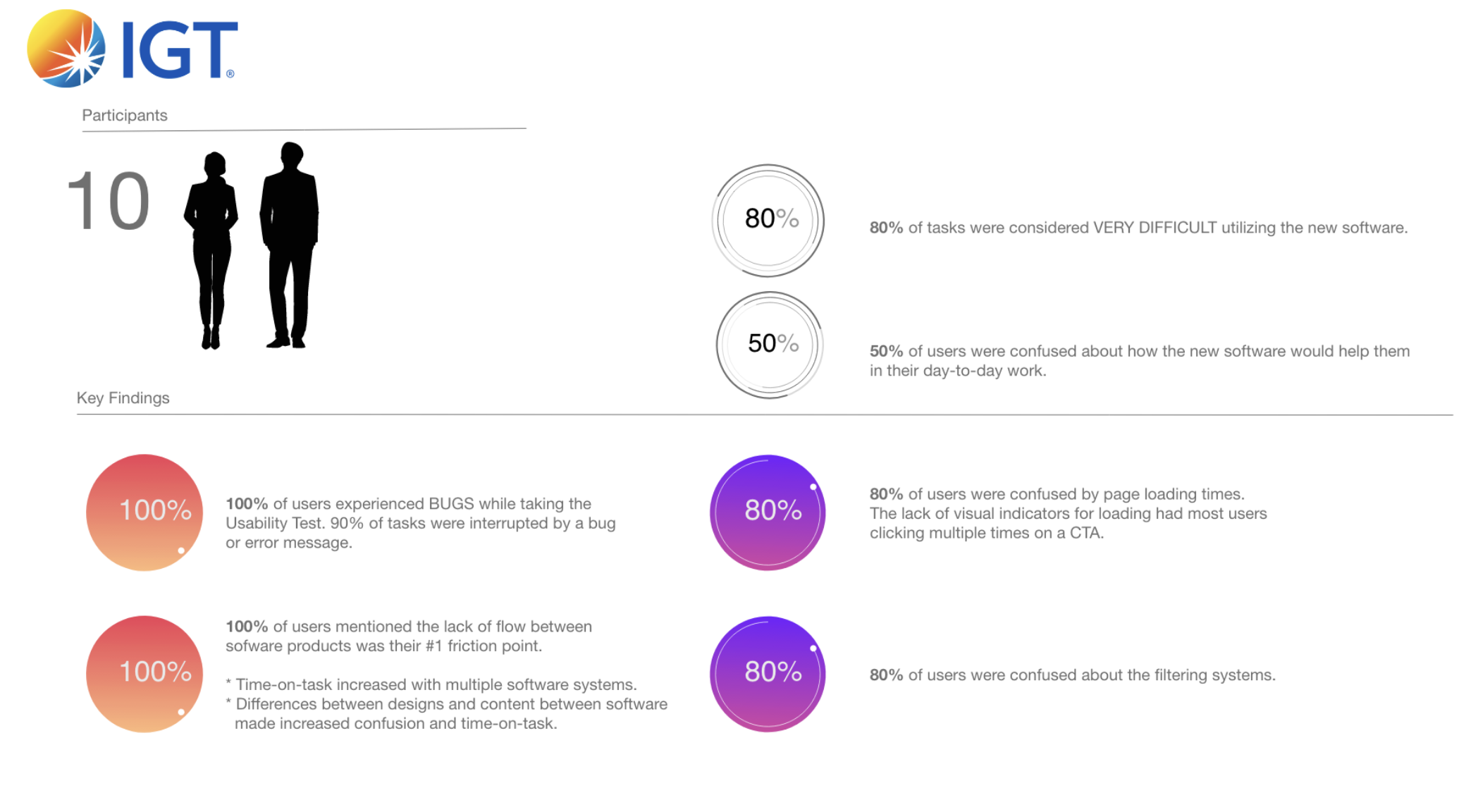
We partnered with live casino properties to test cashless prototypes with real paying customers inside authentic gaming environments.
Testing covered: Account creation · Machine pairing · Wallet funding · Cash-in / cash-out · Error handling · Customer support flows
Iterating in Agile cycles, we optimized each experience layer before validating the end-to-end ecosystem.
Key insight: Inconsistent casino connectivity impacted transaction speed and pairing reliability — leading to parallel infrastructure optimization efforts with casino IT teams.
In parallel, I led remote usability testing with internal support teams, redesigning workflows to reduce tool fragmentation and improve incident resolution speed.
🎯 4. Strategy & Design Execution
I owned UX strategy decisions and partnered closely with product leadership to shape roadmap direction and platform priorities.Based on research, journey mapping, and live usability testing, I focused on simplifying high-risk transactional flows, reducing cognitive load, and building player trust inside the casino environment.
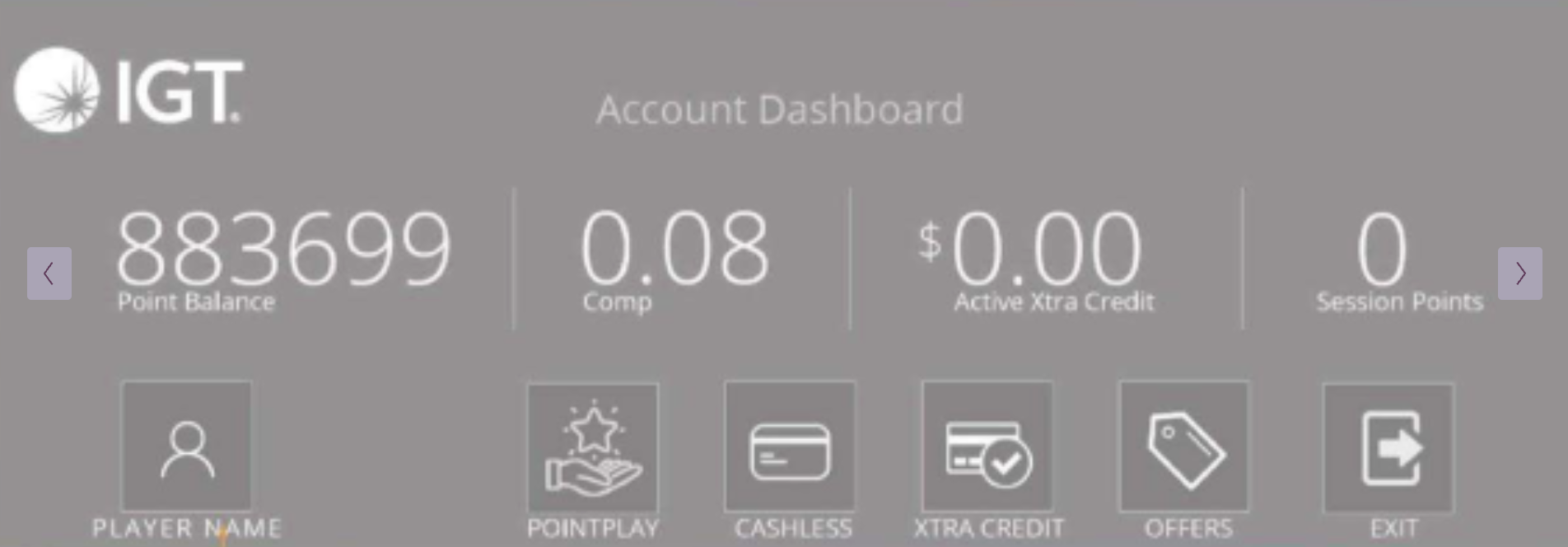
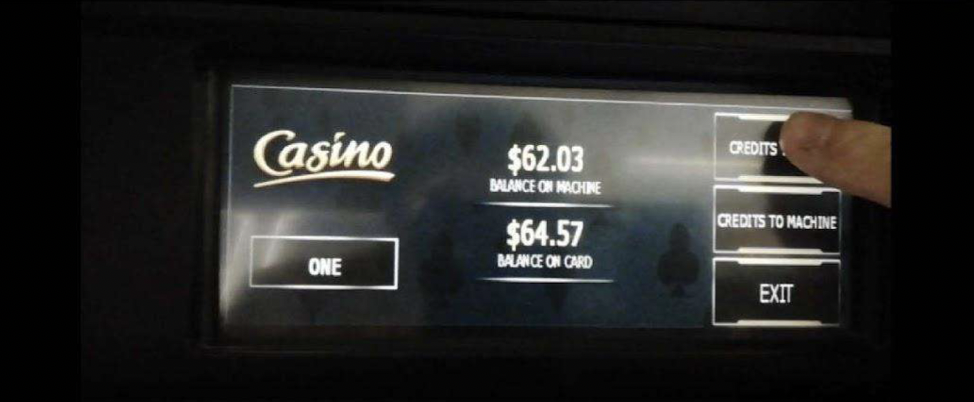
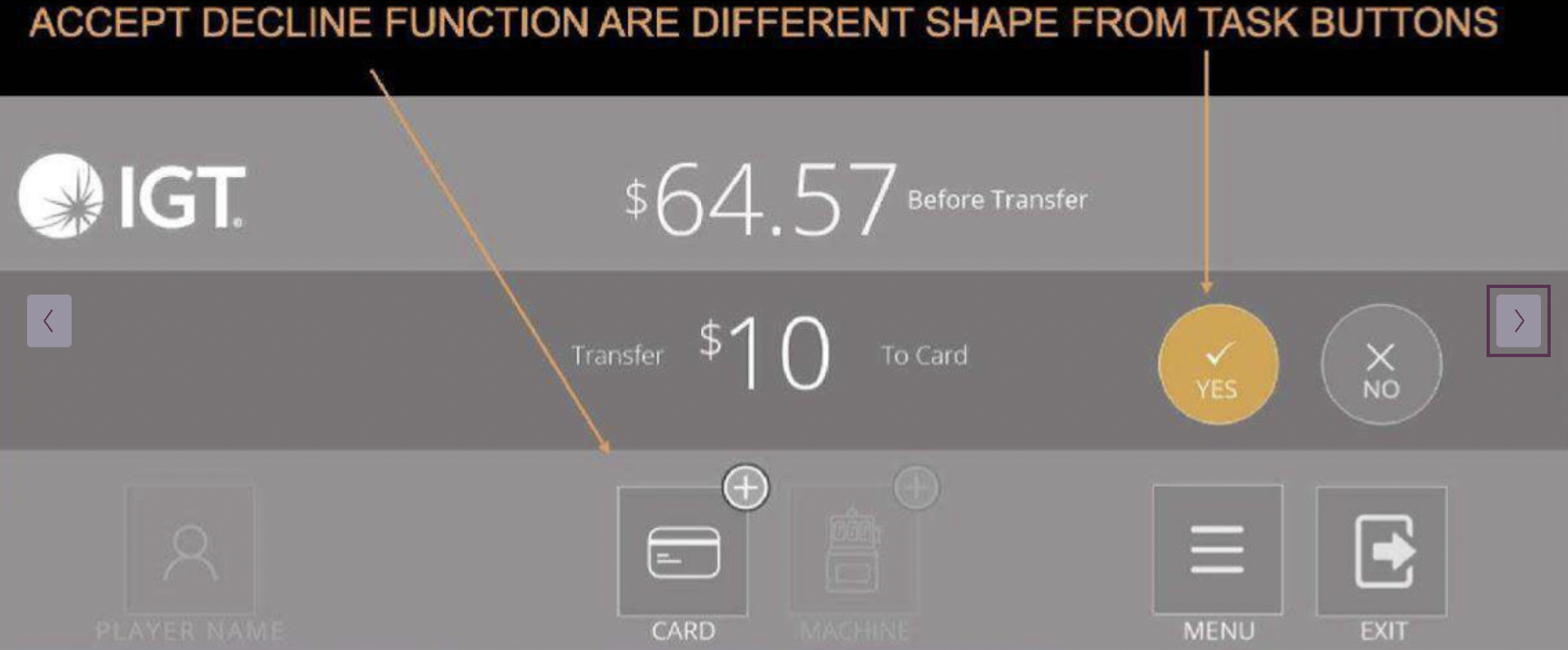
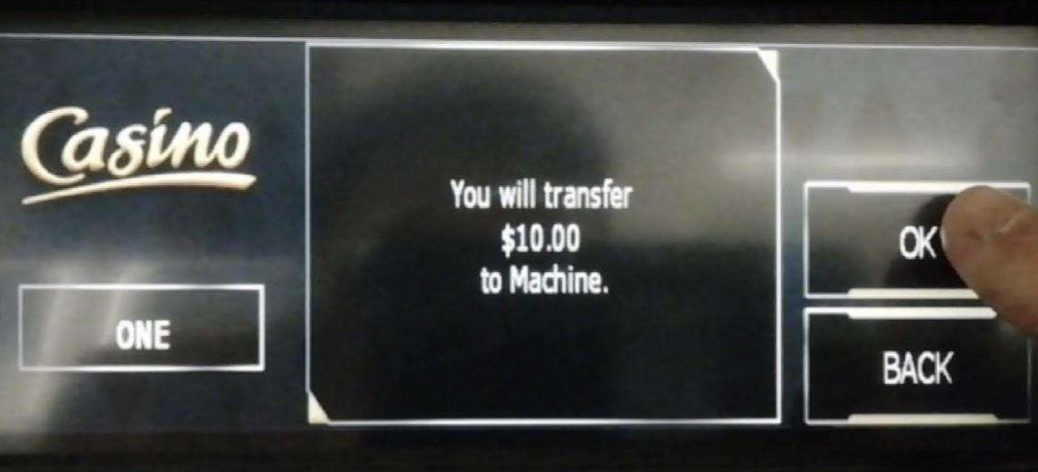
Old Version For IGT Service Window
Before:
Fragmented layout, low hierarchy, unclear money movement, high cognitive load.


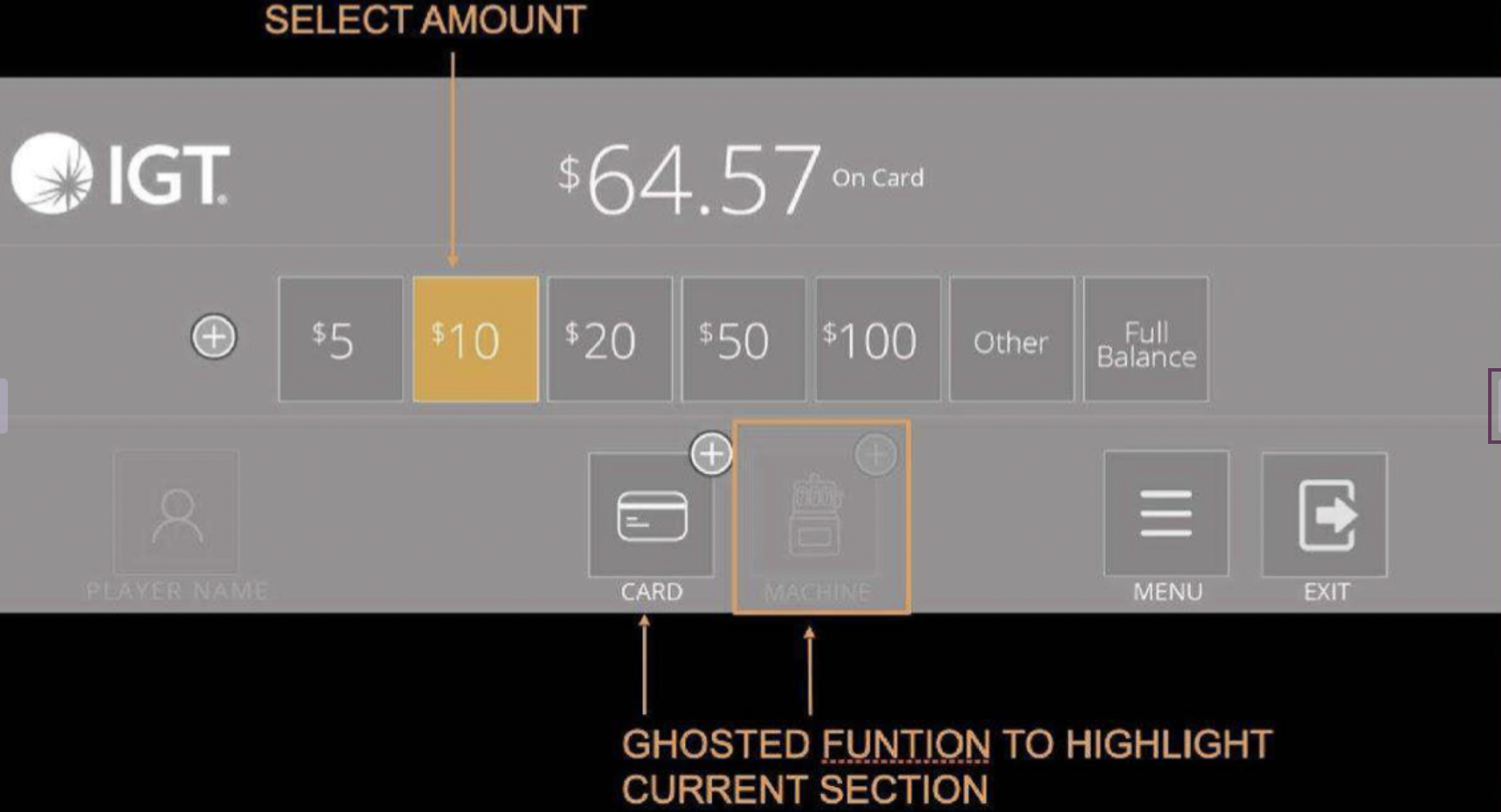
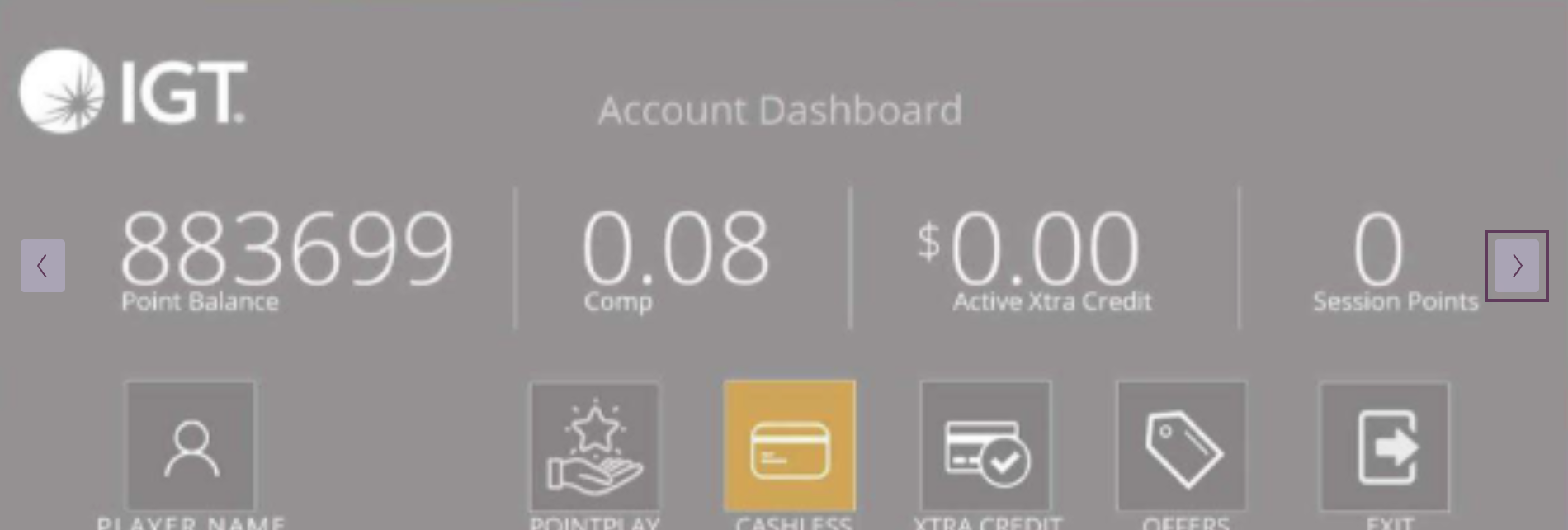
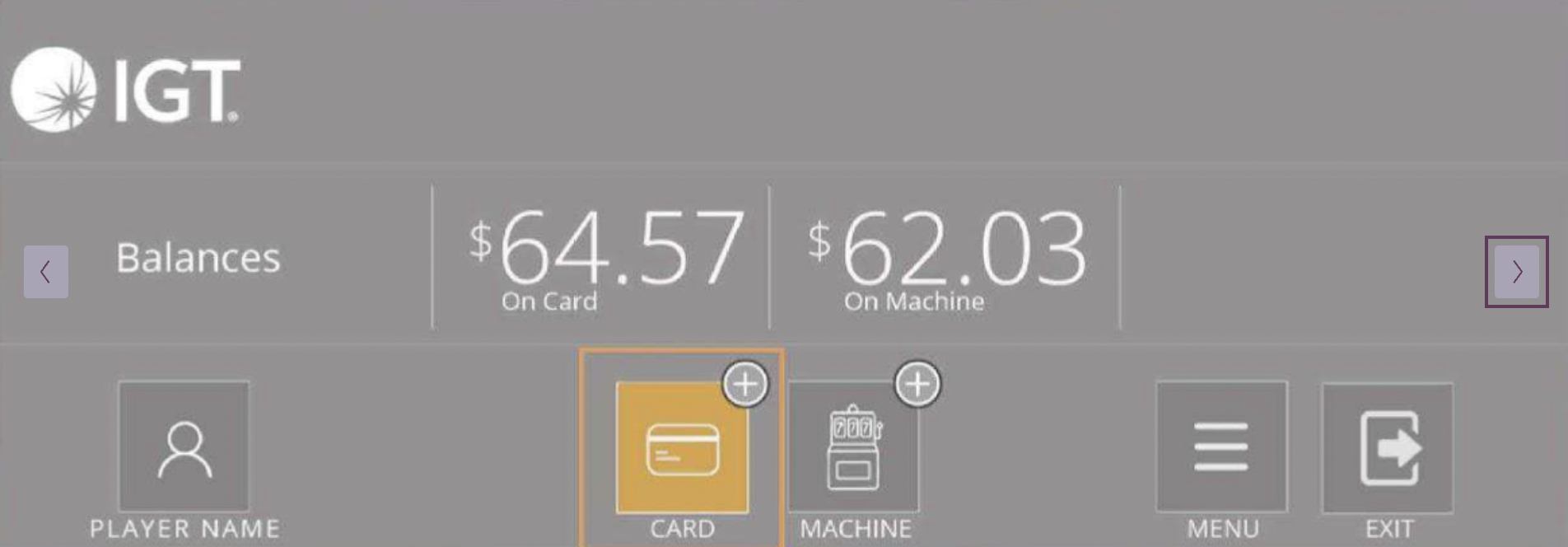
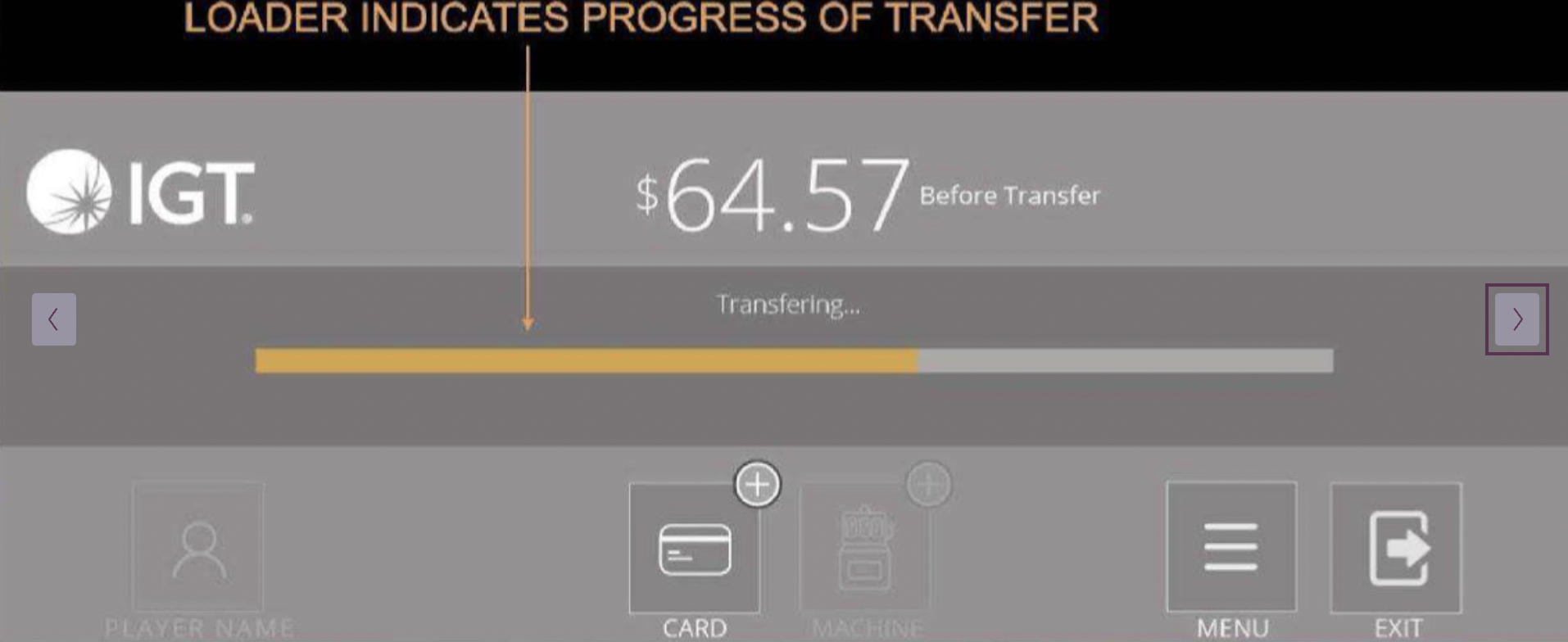
Proposed Version For IGT Service Window
After:
Simplified structure, clear hierarchy, intuitive flows, and confidence-driven interactions. (More iterations were made, although I do not possess those files).
Final UX Execution — Designing High-Trust Transactional Experiences
Speed vs. Trust & Compliance
Balancing instant funding with regulatory compliance required careful UX tradeoffs. We prioritized clarity, confirmation, and user trust over raw speed, ensuring financial safety without disrupting player immersion.
Due to legal and confidentiality constraints, I’m unable to share most of the final production interfaces. However, I can describe the UX strategy, interaction patterns, and system improvements that shaped the final experience.
This project focused on designing clear, trusted, and efficient transactional flows across three tightly connected experiences:
🎰 Player Experience — Cashless on Slot Machines
The primary UX challenge was enabling fast, confident funding directly from the slot machine, without disrupting gameplay or introducing transactional anxiety.
Key UX goals:
Immediate balance clarity
Simple cashless entry
Safe transaction confirmation
Rapid return to play
UX Improvements:
Clear separation of card, wallet, and machine balances
Simplified funding actions
Explicit confirmation and success feedback
Reduced interaction steps
This resulted in a more intuitive, trusted, and seamless funding experience inside live casino environments.
🏢 Casino Operations Platform
Casino staff required tools to manage cashless activity while maintaining regulatory compliance and operational visibility.
UX Improvements:
Simplified transaction monitoring
Improved data visibility
Streamlined compliance workflows
Reduced operational friction
This improved speed, accuracy, and oversight across casino floor operations.
🎧 Customer Support & Technical Platform
Support agents previously relied on fragmented systems and manual tracking, creating high cognitive load and error risk.
UX Challenges Identified:
Disconnected software tools
Poor data continuity
Manual tracking of user information
UX Solutions:
Redesigned information architecture
Improved data carry-through across workflows
Reduced system fragmentation
This significantly reduced resolution time, cognitive load, and operational errors.
UX Outcome
Clear and trusted player interactions
Faster, safer transactional workflows
Improved operational efficiency
Stronger system coherence across platforms
All while meeting strict regulatory, security, and hardware constraints.