
Creating a Better Furniture Shopping Experience
Ashley Furniture is one of the world’s largest furniture retailers, operating 2,000+ locations globally.
This project focused on redesigning Ashley’s end-to-end e-commerce experience to improve product discovery, simplify purchasing, and increase confidence when buying high-value furniture online.
Role: UX Strategist & Product Designer
Timeline: 30 weeks
Impact: Improved usability · Reduced friction · Higher shopping confidence

The Challenge.
How might we design an online furniture shopping experience that helps users:
Quickly discover the right products
Feel confident purchasing high-ticket items
Build trust through visuals, reviews, and transparency
Reduce overwhelm from massive product catalogs
Seamlessly bridge online and in-store shopping
The goal was to create a frictionless, trustworthy, and intuitive experience that supports both digital-first buyers and in-store shoppers, while simplifying discovery, comparison, and checkout.
Methodology & Vision.
Product Vision
Design a frictionless, trustworthy, and omnichannel furniture shopping experience that supports users from product discovery to purchase — both online and in-store..
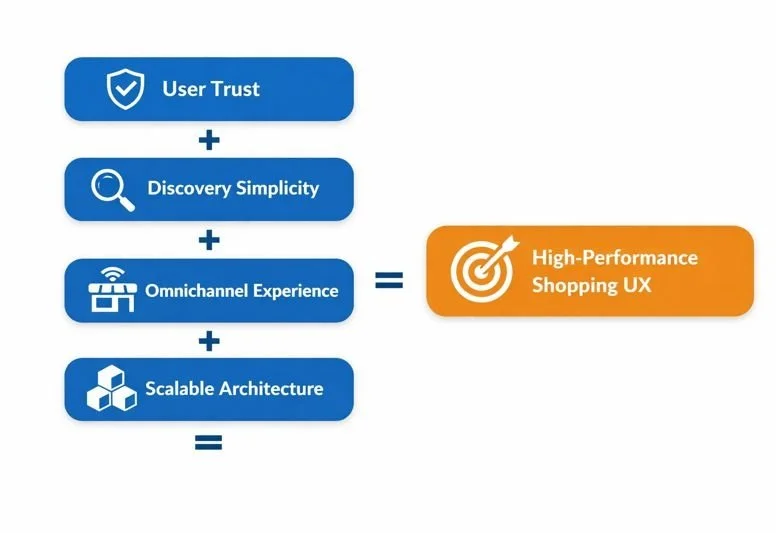
Business & UX Goals
Improve product discovery across large catalogs
Increase purchase confidence for expensive items
Simplify checkout and post-purchase flows
Bridge online and physical store experiences
Design scalable UX patterns across devices and platforms

Design Strategy
To achieve this, the approach focused on:
Deep user research and behavioral insights
Clear information architecture and navigation
Strong visual hierarchy and product storytelling
Cross-platform UX consistency
This ensured the solution balanced usability, scalability, and business goals.

To understand user behavior, expectations, and market gaps, I conducted mixed-method research combining quantitative data, qualitative interviews, and competitive benchmarking.
Research Approach
User surveys & behavioral analysis
1:1 interviews with furniture shoppers
Market research across leading e-commerce platforms
Competitive analysis of furniture and general retail platforms
Key User Insights
Users rely heavily on search and filters to navigate large catalogs
Reviews, ratings, and Q&A are essential to build purchase confidence
High-quality real product imagery is critical for trust
Users expect fast, simple checkout flows
Return policies, delivery transparency, and shipping clarity strongly influence decisions
Many users browse online but still want in-store validation before buying
Competitive Analysis
We benchmarked direct and indirect competitors to understand industry standards, UX patterns, and opportunity gaps.
Direct competitors:
Pepperfry · Urban Ladder · Ashley HomeStore
Indirect competitors:
Amazon · eBay · Shein
Key findings revealed that most furniture platforms lacked strong trust-building features, product storytelling, and seamless omnichannel flows, creating clear opportunities for UX differentiation..
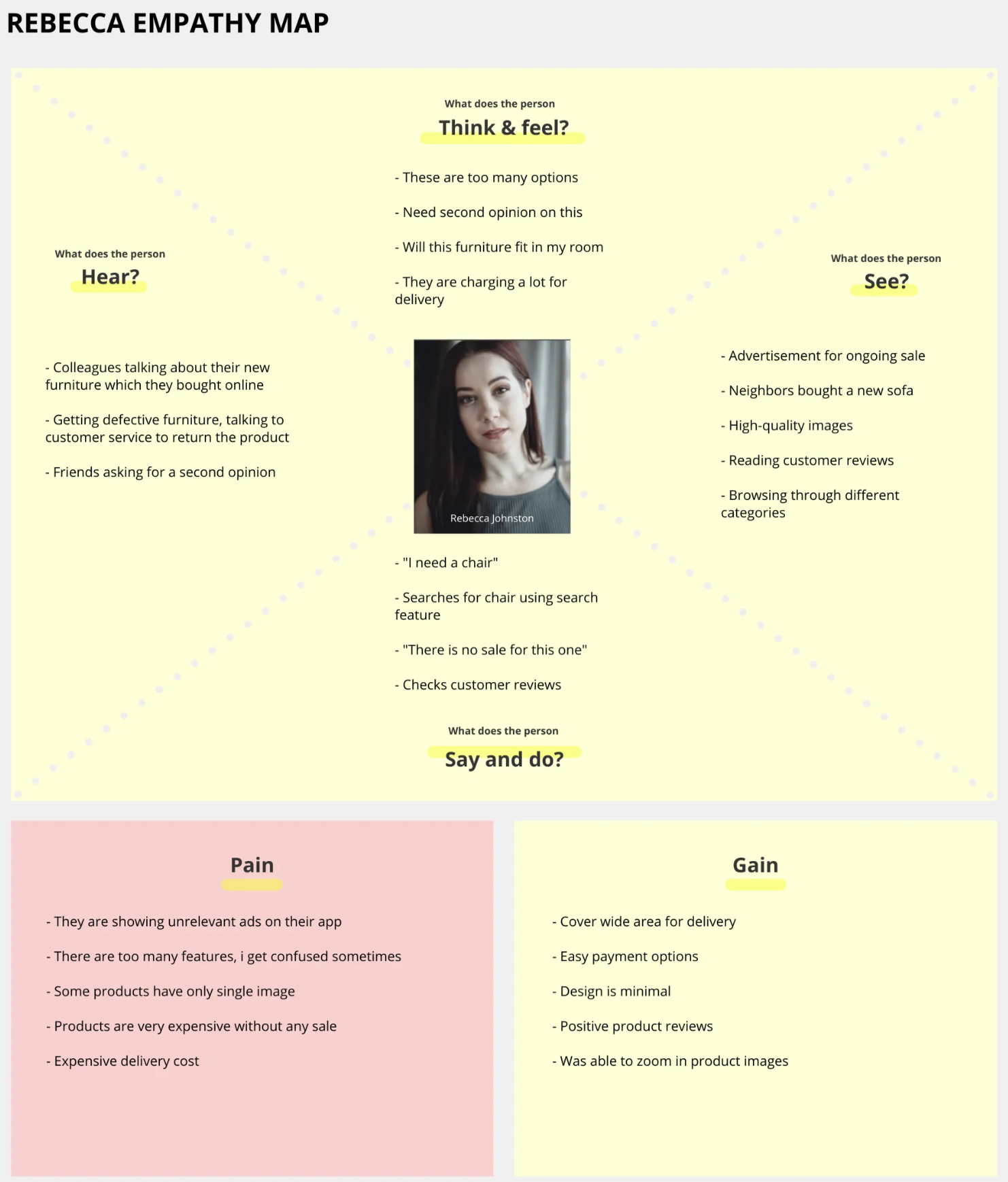
Personas & Empathy Mapping
Using qualitative and quantitative insights, I developed core user personas and empathy maps to represent dominant behavioral patterns, goals, and frustrations.
These personas guided:
Feature prioritization
Navigation structure
Product page design
Checkout optimization
Ensuring all design decisions were grounded in real user needs, not assumptions.


Research & Competitive Analysis

UX Strategy & Design Execution
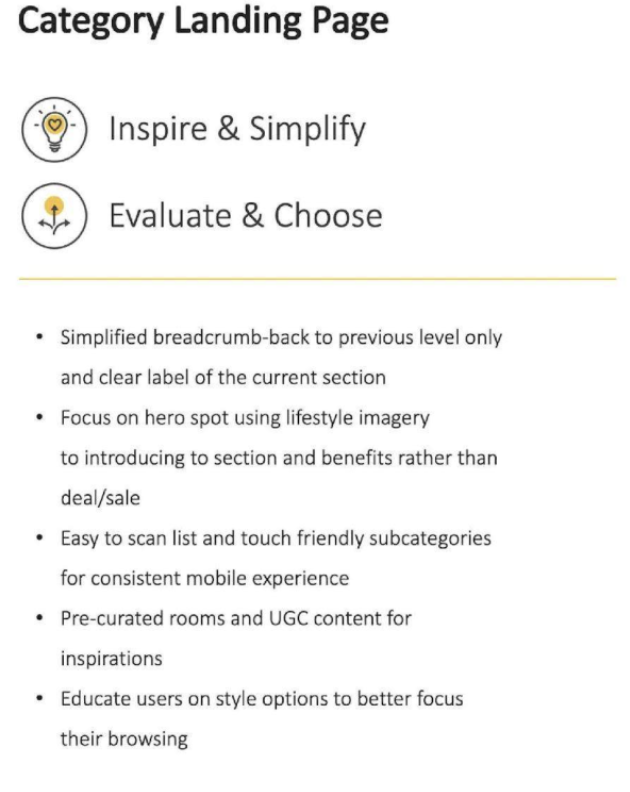
Based on research insights, I translated user needs into clear UX flows, structured information architecture, and intuitive interaction models that simplified discovery, comparison, and checkout.
The strategy focused on:
Reducing friction across key shopping journeys
Improving product discoverability
Increasing trust for high-value purchases
Creating consistent omnichannel experiences
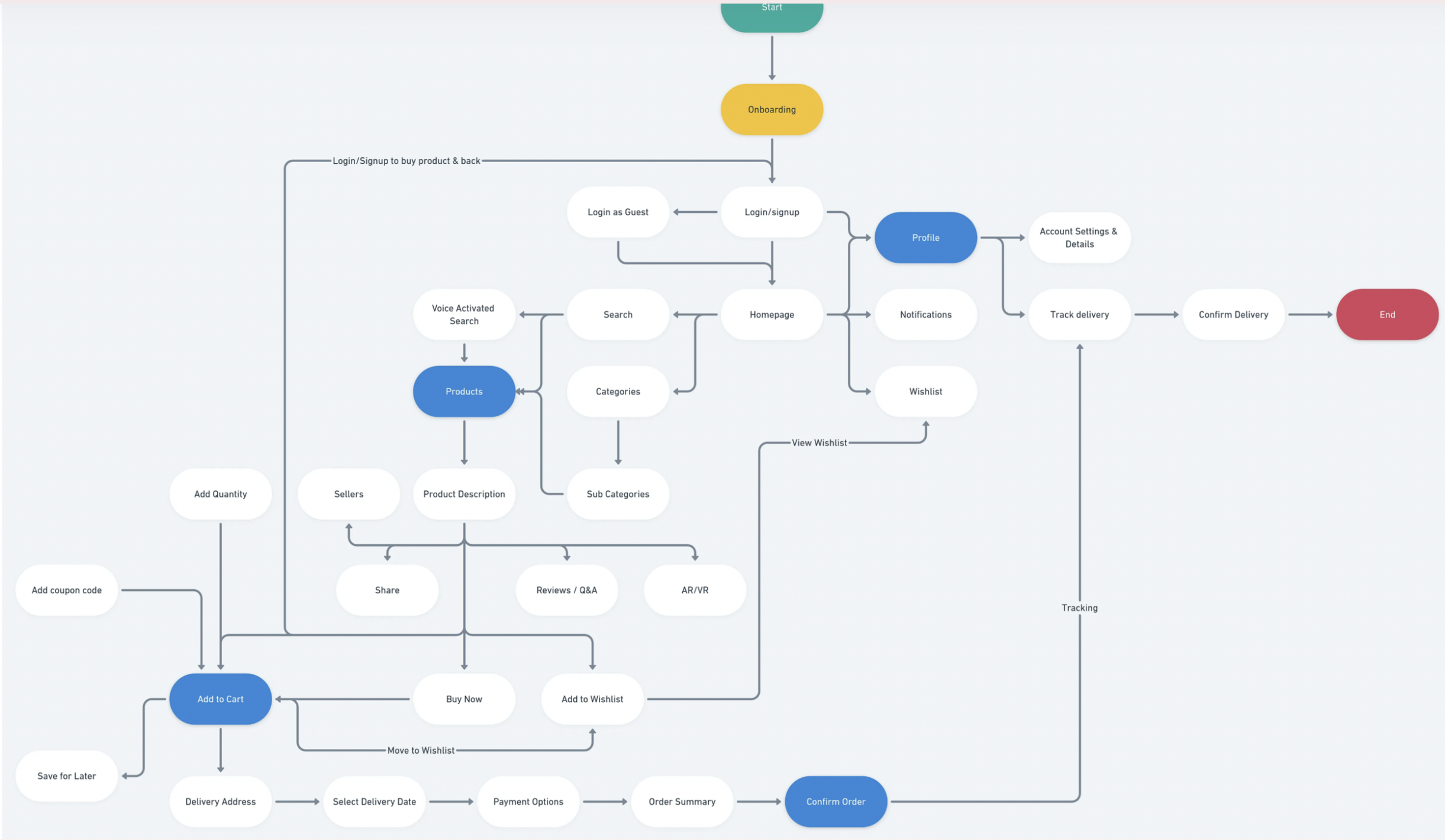
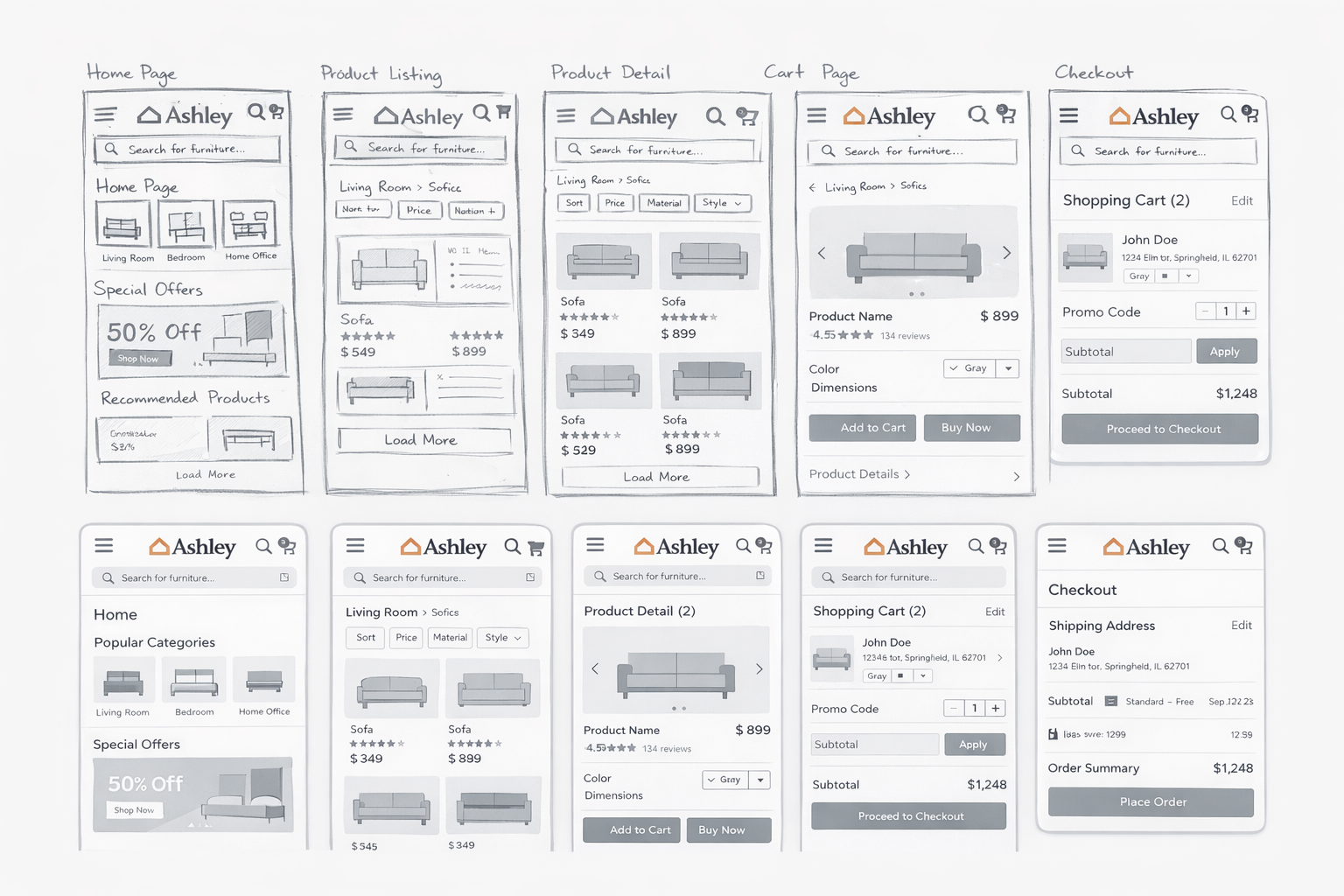
UX Flows & Wireframing
I mapped end-to-end user flows across discovery, product exploration, checkout, and post-purchase management.
These flows guided early low-fidelity wireframes, enabling rapid iteration across:
Product discovery & search
Product detail pages
Cart & checkout
Payments
Order tracking & delivery
High-Fidelity UI Design
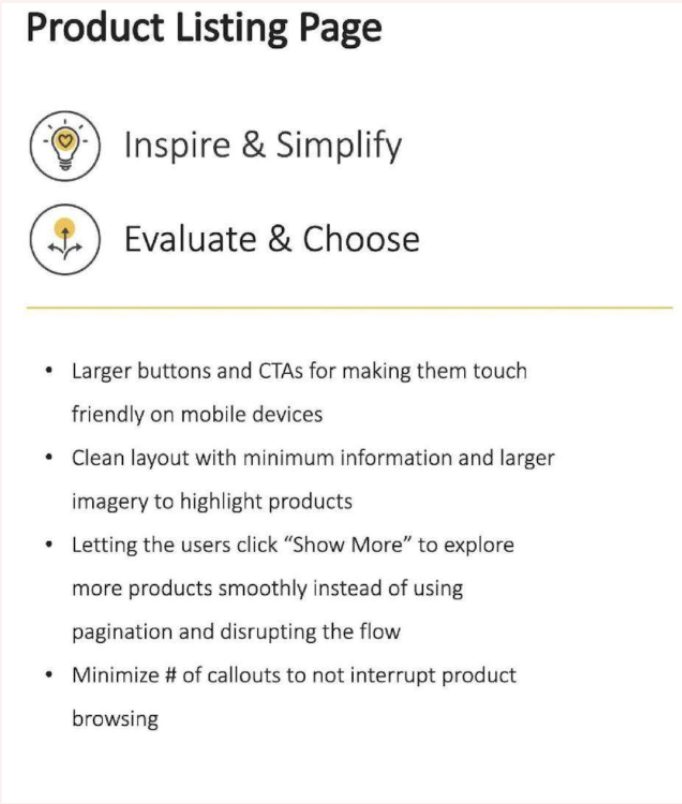
Once flows were validated, I developed high-fidelity designs and interactive prototypes to define visual language, hierarchy, and interaction patterns.
The visual system focused on:
Clean product presentation
Strong content hierarchy
High-quality imagery
Clear calls-to-action
Minimal cognitive load
Usability Testing & Iteration
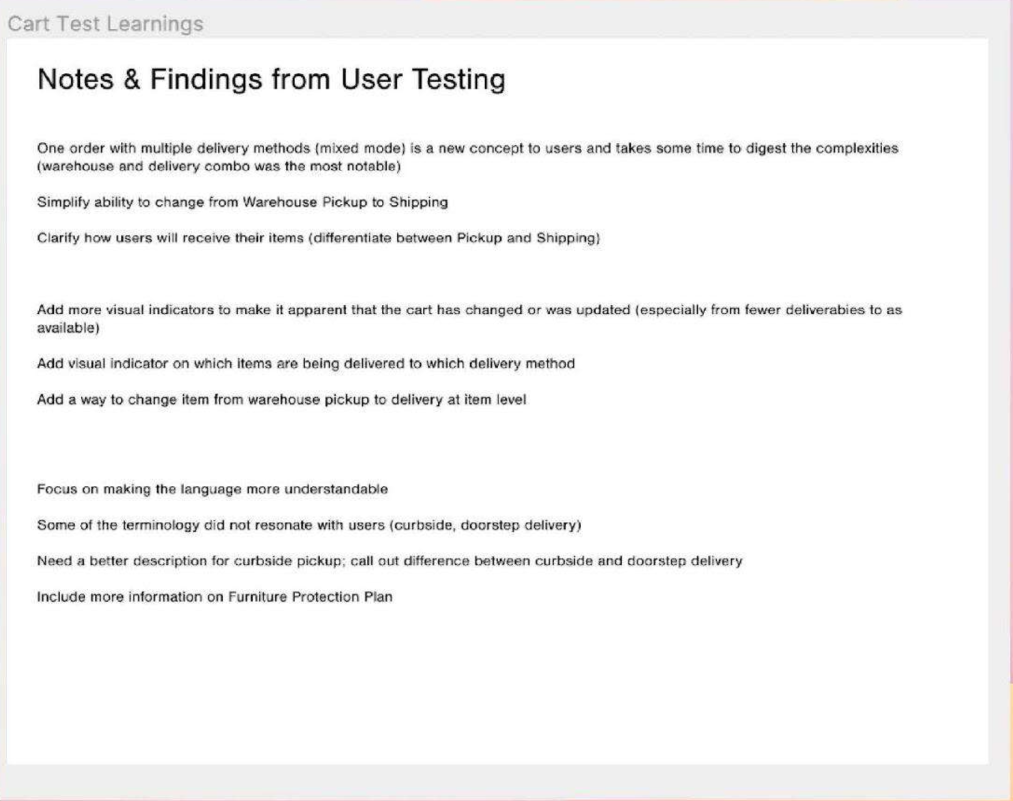
Interactive prototypes were tested with users to validate flow clarity, discoverability, and transaction confidence.
Testing revealed friction in:
Navigation clarity
Checkout speed
Product comparison
Warehouse pickup vs shipping clarity
These insights drove rapid design iterations, resulting in simpler flows, clearer layouts, and improved task completion rates.


Ashley Furniture Today.
Through research-driven UX strategy and iterative design, this project transformed Ashley’s e-commerce experience into a clear, trustworthy, and conversion-focused shopping platform.
Measured UX & Business Impact
+20% increase in customer retention
Reduced time-to-purchase by ~35%, streamlining product discovery and checkout
Decreased shopping friction, reducing the number of steps and clicks required to complete a purchase
Improved engagement and browsing efficiency, lowering time-on-site while increasing task completion
The redesign delivered a faster, simpler, and more intuitive furniture shopping journey, improving both customer satisfaction and business performance.
